

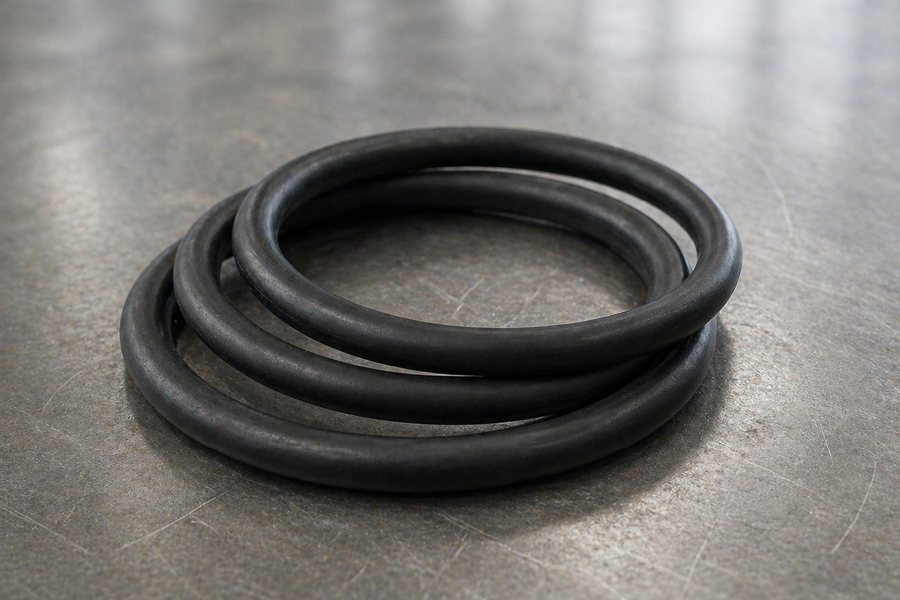
Choosing the right rubber seal is crucial for reliable pump operation. During overhaul and maintenance projects, we regularly see that the wrong choice of material leads to leaks, chemical corrosion, or premature wear. Viton® FPM, EPDM, and NBR are the most commonly used elastomers, but each material has specific properties and limitations. In this article, we explain when to choose which type and when not to.
What is the function of rubber seals in a pump?
Seals prevent fluid from escaping past rotating or stationary parts. They must also be resistant to the medium, temperature, and mechanical stress. The right choice directly determines the service life of bearings, mechanical seals, and pump housings. Errors in material selection are one of the most common causes of unwanted overhauls.
When should you use NBR (nitrile rubber)?
NBR is the most commonly used sealing material in industrial pumps. It offers a good balance between cost, chemical resistance, and wear resistance.
Suitable for:
Do not use with:
In overhaul work, we often see that NBR is used where there is actually only light chemical exposure. This leads to hardening or cracking, resulting in leakage.
When should you choose EPDM?
EPDM is highly resistant to water, steam, and many chemicals. It is widely used in process installations, irrigation systems, and pumps that handle more aggressive water.
Suitable for:
Do not use with:
EPDM is sometimes incorrectly chosen for systems containing lubricants or oil-containing products. This causes rapid swelling and loss of elastic properties.
When is Viton® FPM (FKM) the right choice?
Viton is a fluoroelastomer with high chemical and thermal resistance. It is used where standard rubbers fail due to aggressive media or high temperatures.
Suitable for:
Do not use with:
In practice, Viton® FPM is sometimes seen as “always better,” but that is not true. In hot-water pumps or steam applications, EPDM actually performs better than Viton.
Want to know more?
Every application requires a suitable solution. Is your question not addressed in this article, or would you like to discuss your specific situation? Please contact one of our specialists. We are happy to assist you with expert advice and practical support.